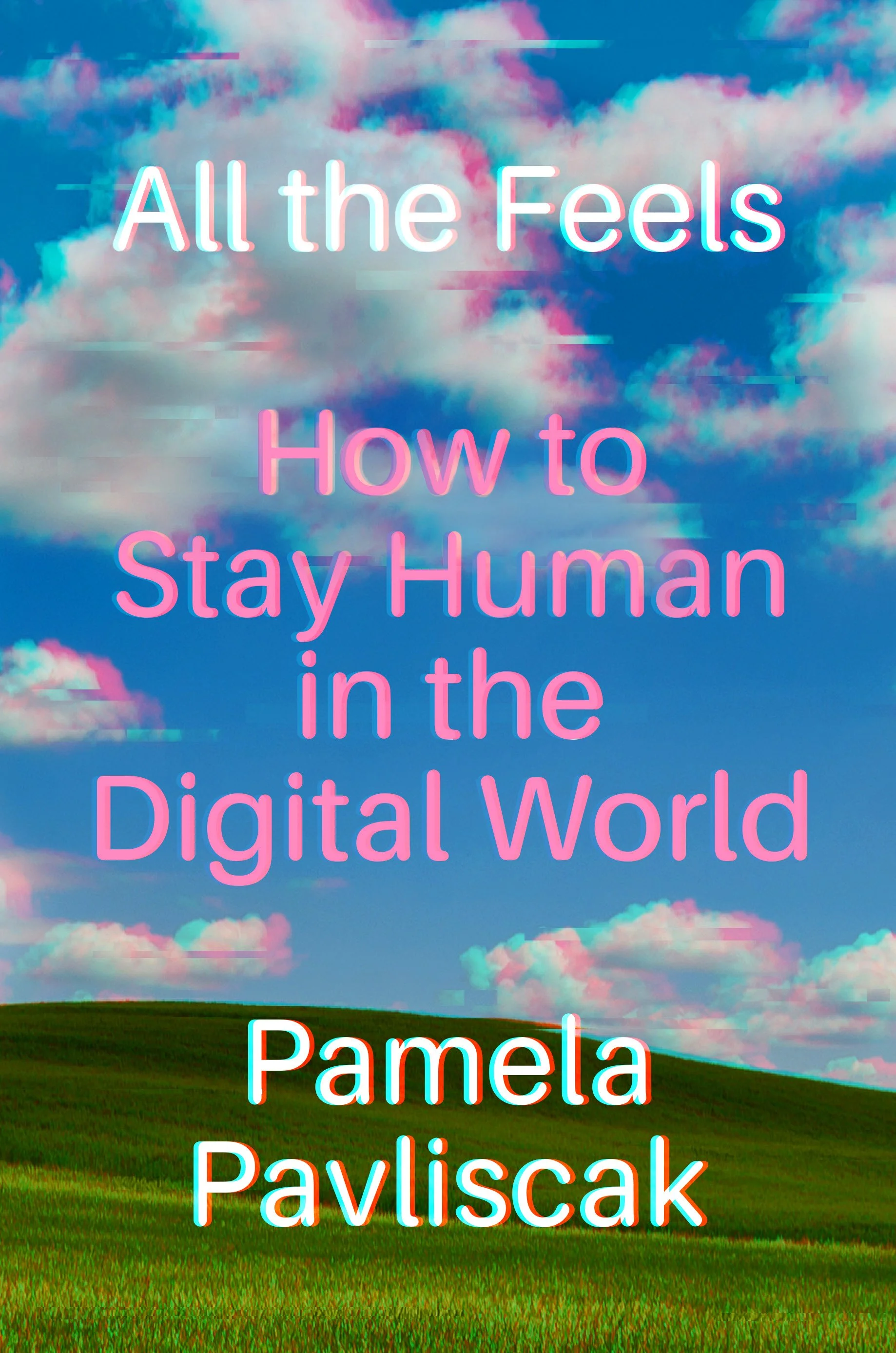
We didn’t plan to have so many feelings on the internet, but here we are
All the Feels is a guide to understanding our emotional lives in the digital age—how we yearn for connection and search for meaning in the glow of our screens. Blending research, cultural insight, and personal stories, the book explores the quiet rituals and loud performances that shape how we feel online. From ghosting to group chats, TikToks to text bubbles, it shows how the internet has rewired emotion. Rather than telling readers to log off, the book asks how we might stay empathetic in a world that never powers down. Whether you're a confused parent, an anxious scroller, or just someone trying to make sense of your screen habits, this book helps you decode your digital feelings and rethink what emotional well-being looks like in an always-on world.
AVAILABLE JUNE 9 IN HARDCOVER, AUDIO, AND EBOOK
The emotional patterns of life online
-
We keep inventing new words for feelings we didn’t know how to name. The internet didn’t make us less emotional. It made us more specific. From “main character energy” to oddly precise memes and micro-reactions, we keep inventing language for feelings that used to slip by unnamed. Atomizing is how our emotional vocabulary keeps expanding, one hyper-specific feeling at a time, often faster than dictionaries can keep up. If you’ve ever thought “there’s a word for that now,” you’ve felt this pattern at work.
-
When emotion flattens online, we turn the volume up. Without tone of voice or body language, we lean on emojis, GIFs, caps lock, voice notes, and exaggerated punctuation. Amplifying is how we sneak nonverbal feeling back into digital space. It’s not about being dramatic. It’s about being understood.
-
Some emotions aren’t messages. They’re atmosphere. Feeds, notifications, group chats, and shared news cycles create a background mood we all tap into. Ambient emotion is the feeling of opening an app and instantly sensing the vibe. We rarely opt in, but we absorb it all the same.
-
Connection online isn’t just about adding more people. It’s about staying in rhythm with the ones who matter. Daily streaks, shared playlists, location pings, and “thinking of you” texts act like emotional tuning forks. Attuning is how we practice care and attention across distance, learning when to lean in, when to check back later, and when silence itself is a signal.
-
Flat screens can’t hold big feelings on their own. So we add sound, movement, texture, and rhythm through ASMR, ambient videos, music loops, and haptic cues. Augmenting emotion can intensify pleasure or help us self-soothe when things feel overwhelming. It’s how feeling becomes more embodied, even online. It’s not escapism so much as emotional scaffolding.
-
At some point, the tools start feeling less like tools. We name our robots, thank our apps, and feel a flicker of guilt shutting devices down. Animating technology reveals how easily we project human qualities onto machines, and how quickly relationships can form in that space. It also raises the question “what happens when the things we talk to start talking back?”
The backstory
All the Feels didn’t start as a book. It started as a pattern I couldn’t unsee.
Over and over, I noticed how people talked about their digital lives in emotional terms. Not just anxiety or outrage, but longing, comfort, grief, delight. People were haunted by old texts, reassured by memes, strangely soothed by AI voices. There was love tucked into playlists, joy in the timing of a perfectly stupid emoji, loss lingering in group chats long after the conversation moved on. These feelings weren’t side effects. They were the story.
At the same time, my professional life was spent inside tech research rooms, watching interfaces dissected and user behavior analyzed, while emotion was often waved away as anecdotal or out of scope. But to me, those small emotional flickers were the main signal. Why does a like give us a tiny rush? Why does being left on read sting? These weren’t trivial moments. They were clues.
What struck me was how rarely this complexity is reflected back to us. The dominant stories about technology tend to be stark binaries. Either the systems are broken, or you are. I wanted to write a book that didn’t tell you to log off, but also didn’t pretend everything was fine. A book that took feelings seriously, not as problems to solve but as clues to what we care about. I wanted to write something for readers who have a lot of feelings and are hungry for meaning in the mixed reality we live in.
Over the past decade, I’ve studied how people actually live with technology. What began as a single study grew into more than five thousand diary entries from people across ages, backgrounds, and belief systems. I asked participants to document their emotional lives online in whatever way felt natural. Some sent simple logs of daily highs and lows. Others wrote long reflections at two in the morning. A few shared folders labeled “for your research eyes only.” Through photos, texts, videos, and follow-up conversations, they helped build a living archive of internet feelings.
Along the way, I talked with teens who use TikTok to process emotions, parents who text their kids from the next room to keep the peace, and people who’ve whispered their deepest worries to a chatbot late at night. What I found is that our digital lives are already full of feeling, even when those feelings move too fast or fall flat.
All the Feels is my attempt to slow things down. To look closely. To help us make sense of what it actually feels like to live online, and to ask how we might stay empathetic, curious, and human without disappearing from the world we’re already in.